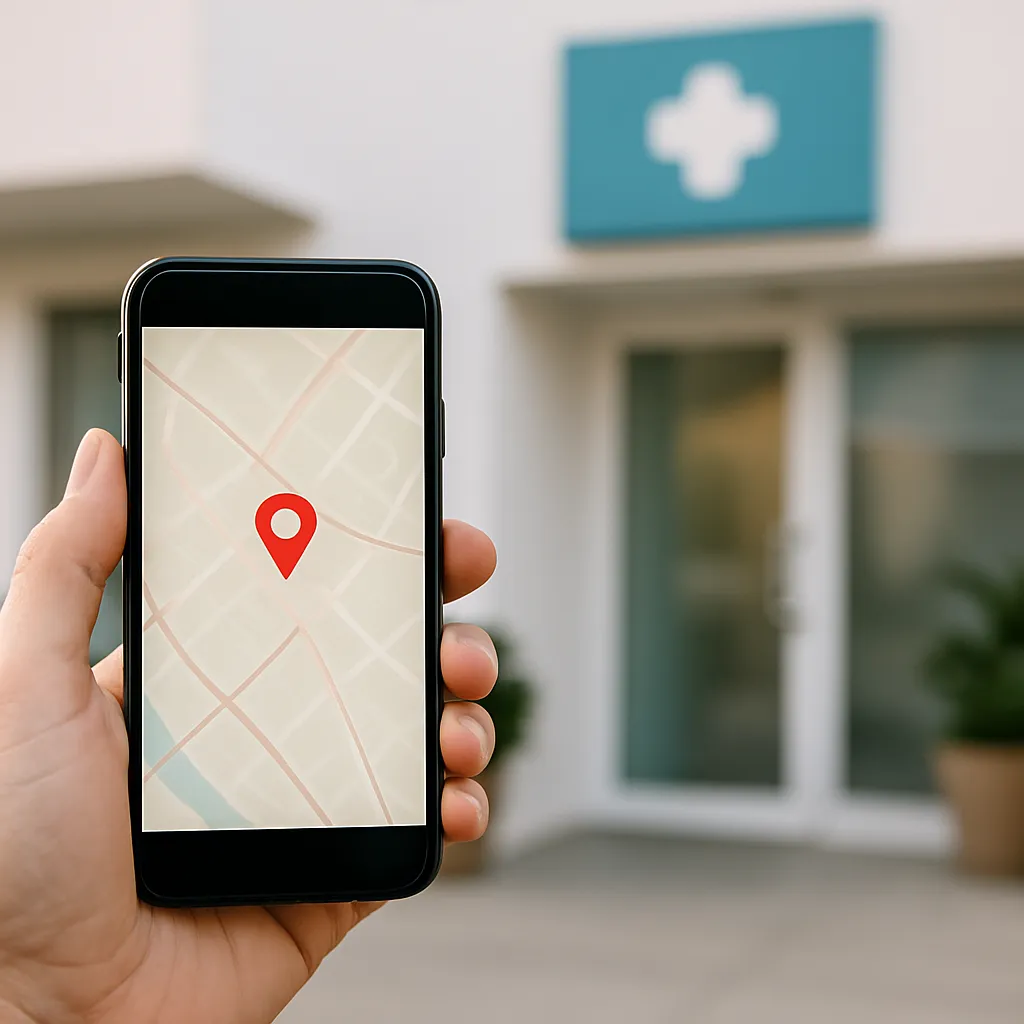
When someone in your town types “dermatologist near me” or “urgent care open now,” Google answers in about a second, with a little map and three practices pinned under it. That box, the “map pack,” is where most local patients actually choose who to call. If your practice isn’t in it, you’re invisible for the exact moment a patient is ready to book.
The good news: getting into that map is far more within your control than ranking a website on page one. It comes down to a handful of things Google looks at, and most practices only do half of them. Here’s how to do all of them.
Why your practice might not be showing up
Usually it’s one of a few things: you haven’t claimed your Google Business Profile, your name, address, and phone number don’t match across the web, you picked a vague category, or you simply have fewer recent reviews than the practice two blocks over. Google is trying to show the most relevant, most trusted, closest option, so every one of those gaps quietly pushes you down.
The fix isn’t a secret or a paid trick. It’s getting the fundamentals genuinely right and keeping them fresh.
Step 1: Claim and verify your Google Business Profile
Everything starts here. Your Google Business Profile (the old “Google My Business”) is what feeds the map pack, and an unclaimed or half-finished profile is the single most common reason a practice stays invisible.
Go to google.com/business, search for your practice, and claim it. If someone set it up years ago and no one has the login, you can request ownership. Then verify it, usually by postcard, phone, or video. Nothing you do afterward counts until the profile is verified.
Step 2: Make your name, address, and phone identical everywhere
Google cross-checks your practice’s details against the rest of the web, your website, health directories, insurance listings, Yelp, Facebook. When those details disagree, even by a suite number or “St.” versus “Street,” it lowers Google’s confidence and your ranking.
Pick one exact format for your practice name, address, and phone, and use it everywhere, character for character. This one unglamorous habit quietly separates practices that rank from ones that don’t.
Step 3: Choose the most specific category, then fill in everything
Your primary category tells Google what you are. “Doctor” is weak; “Dermatologist” or “Pediatric Dentist” is strong. Choose the most specific primary category that fits, then add relevant secondary ones.
From there, complete the profile fully: services, hours (including holidays, so “open now” searches surface you), insurances accepted, a real description, and your website and booking links. A complete profile outranks a bare one almost every time.
Step 4: Earn reviews, and reply to them
Review count, average rating, and how recent they are all feed local ranking, and they’re also the first thing a prospective patient reads. A steady trickle of genuine recent reviews beats a big one-time push that then goes stale.
Build a simple habit of asking every happy patient at the right moment, and reply to the ones you get, warmly to the good ones and calmly to the rest. (Just remember the health-privacy line: never confirm someone was a patient or mention any detail of their care in a public reply.)
Step 5: Add photos, and post regularly
Profiles with real photos of the office, team, and waiting room get meaningfully more clicks than ones without. And posting the occasional update, a new service, a welcome to a new provider, signals to Google that the practice is active and cared for. Both are small efforts that compound.
How long does it take?
Honest answer: usually a few weeks to a few months. Verification and profile completeness can help within weeks; reviews and consistency build over months. Local rankings reward patience and steadiness far more than any one big move.
A few questions we hear
Yes. Claiming, verifying, and fully optimizing your profile costs nothing, it's the highest-return free thing a local practice can do.
Ranking blends relevance, distance, and prominence, not just star rating. A more complete profile, more consistent listings, or more recent reviews can outweigh a higher average.
No. The map pack is organic. Google Ads can put you in a separate "Sponsored" spot, but the three organic pins are earned, not bought.
Getting into the map pack is mostly discipline: claim it, keep it consistent, keep it fresh, keep the reviews coming. If you’d rather have a team handle all of it, that’s exactly the kind of local SEO for medical practices we run, and in each area we take only two practices per specialty, so a competitor can’t hire us to outrank you.
Want us to handle your local visibility?
We'll audit your Google presence and show you exactly what's keeping you out of the map pack, on a free 20-minute call.
Book a call