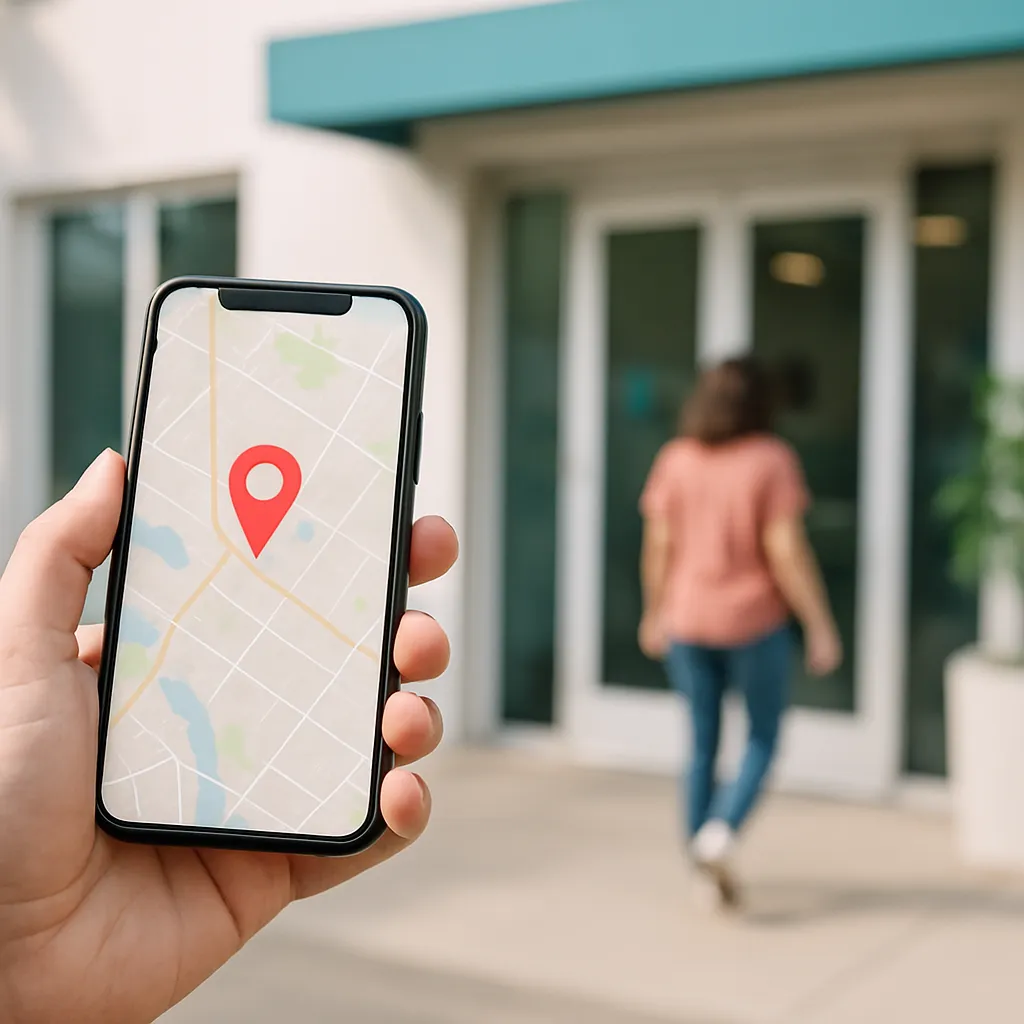
A patient wakes up with a swollen jaw, or a rash that wasn’t there yesterday, or a kid running a fever, and the first thing they do isn’t call their regular doctor. They grab their phone and type something like “urgent care near me” or “endodontist open Saturday.” Within a second, Google hands them a short list, a little map, and a few options ranked by who it trusts most. That whole moment, from worry to a booked appointment, often happens before your front desk has had its first coffee.
Local SEO is simply the work of making sure your practice is the one Google puts in front of that person. It isn’t a dark art, and it isn’t something you buy your way into. It’s a set of signals you can genuinely control, and most practices only tend to half of them. This guide walks through all of them, in the order that actually matters, so you can see where your visibility is leaking and how to fix it.
What is local SEO for doctors, really?
Regular SEO is about ranking a page for a topic. Local SEO is about ranking a place for a searcher who’s nearby and ready to act. When someone searches with local intent, whether they type “near me” or not, Google quietly figures out where they are and shows businesses that are relevant, close, and trusted enough to recommend.
For a medical practice, that shows up in two connected places. There’s the “map pack,” the boxed set of three practices pinned to a small map near the top of the results, and there’s the regular list of blue links below it, where your website competes. The map pack is where most local patients actually choose who to call, so it’s where the bulk of your attention should go. Google leans on three broad factors to build it: relevance (do you match what they searched?), distance (how close are you?), and prominence (how well known and well regarded are you?). Almost everything in this guide is really about strengthening one of those three.
The encouraging part is that local visibility is far more winnable than trying to outrank a national health site for a generic term. You’re competing with the handful of practices in your own zip code, not the entire internet, and many of them haven’t done the basics.
Your Google Business Profile is the foundation
If you do only one thing after reading this, make it this. Your Google Business Profile (the listing formerly called Google My Business) is what feeds the map pack. An unclaimed or half-finished profile is the single most common reason a good practice stays invisible while a weaker one two blocks away shows up first.
Start by claiming it at google.com/business and verifying it, usually by postcard, phone, or video. If a former office manager set it up years ago and the login is long gone, you can request ownership rather than creating a duplicate. Nothing else you do counts until that profile is verified, so treat this as step zero.
Once it’s yours, fill it out completely, not partway. Your primary category does a lot of heavy lifting here: “Doctor” is vague and weak, while “Dermatologist,” “Pediatric Dentist,” or “Orthopedic Surgeon” tells Google exactly what you are. Choose the most specific primary category that fits, then add the relevant secondary ones. From there, add your services, accurate hours (including holidays, so “open now” searches surface you), insurances accepted, a real human description, appointment links, and photos of the actual office, team, and waiting room. A complete profile outranks a bare one almost every time, and it also earns more clicks once it shows up.
We wrote a deeper, step-by-step walkthrough of this piece in how to get your medical practice on Google Maps, so if the map pack is your main gap, start there next.
Why do NAP citations and consistency matter so much?
NAP stands for name, address, and phone number, and consistency of that information across the web is one of the least glamorous, most underrated ranking factors in local SEO.
Here’s why it matters. Google doesn’t just read your website. It cross-checks your practice’s details against dozens of other sources: health directories like Healthgrades and Zocdoc, insurance provider listings, Yelp, Facebook, your local hospital’s referral pages, old directory sites you forgot existed. When those listings agree, character for character, Google grows confident that you are a real, stable, findable business, and confidence lifts your ranking. When they disagree, even over something as small as “Ste. 200” versus “Suite 200,” or a tracking phone number that doesn’t match your main line, that confidence dips.
The fix is boring and powerful. Decide on one exact format for your practice name, address, and phone, then make every listing match it precisely. Clean up the duplicates that inevitably exist from a past move, a rebrand, or a provider who left. This is tedious work, which is exactly why so many practices skip it, and exactly why doing it well quietly separates the practices that rank from the ones that don’t.
Reviews: the signal patients and Google both read
Reviews sit at a rare intersection. They’re one of the strongest local ranking signals Google uses, and they’re also the very first thing a nervous prospective patient reads before deciding whether to trust you with their body. Very few marketing efforts pull double duty like that.
Google weighs the number of reviews, the average rating, and how recent they are. That last part matters more than people expect. A steady trickle of genuine reviews arriving every week tells Google the practice is alive and busy, and it reassures patients far more than a wall of five-star reviews that all stopped eighteen months ago. So the goal isn’t a single big push, it’s a durable habit of asking every happy patient at the right moment, usually just after a good visit or a resolved problem.
Then reply to what you get, warmly to the good ones and calmly to the critical ones. But mind the health-privacy line carefully here, because it’s easy to cross without meaning to: never confirm that someone was a patient, and never reference any detail of their care in a public reply, even to defend yourself. A safe response acknowledges the feedback, apologizes generally, and moves the conversation to a private channel. If you want the timing, scripts, and privacy guardrails spelled out, our guide on how to ask patients for reviews covers the whole system.
On-page local signals on your own website
Your website still matters, both for the blue-link results below the map and for backing up everything your profile claims. The good news is you don’t need a sprawling site, you need clear local signals in the right spots.
Make sure your practice name, address, and phone appear in real text on the site, ideally in the footer of every page and on a dedicated contact page, matching your NAP format exactly. Give each location its own page if you have more than one, and give each major service its own page rather than cramming everything onto the homepage, since a page about “laser skin resurfacing in Scottsdale” can rank for that specific search in a way a generic services list never will. Weave your city and region into page titles and headings where it reads naturally, and never in a stuffed, robotic way. Embed a Google map on your contact page, and add local business structured data so search engines can read your details cleanly.
Speed and mobile experience count too, because the person searching “near me” is almost always on a phone and almost always in a hurry. A slow, clumsy site loses them even when it ranks. We break down what a high-performing practice site looks like in what makes a great medical practice website.
How “near me” and mobile behavior change the game
It helps to picture who’s actually searching. Local medical searches skew heavily toward mobile, toward urgency, and toward action. Someone looking up a specialist for a scheduled consult behaves differently from someone typing “dentist emergency near me” at 9pm, but both are close to a decision, and both are judging you in seconds.
That reality should shape your priorities. Accurate hours prevent the maddening situation where “open now” sends a patient to your door after you’ve closed. A tappable phone number, an obvious “Book online” button, and directions that actually work turn a curious searcher into a booked appointment. And because these searchers rarely scroll far, the difference between the third map pin and the fourth position (which hides behind a “more places” click) is enormous. Local SEO isn’t about being on the list somewhere, it’s about being in the tiny window a hurried person actually looks at.
How do you track whether local SEO is working?
You can’t improve what you don’t watch, and “we feel busier” isn’t a metric. Fortunately, the useful numbers here are refreshingly concrete.
Start inside your Google Business Profile, which reports how many people found you, whether they searched your name directly or discovered you through a category, and what they did next: called, visited your site, or asked for directions. Those actions are the closest thing to a scoreboard for map-pack performance. Layer in your website analytics to see how much traffic arrives from organic and maps sources and whether it converts. Track your rankings for your core “specialty + city” and “near me” terms over time so you can tell a real trend from a good week. And most importantly, connect it to the outcome that pays the bills by asking new patients how they found you, or using call tracking, so you can tie visibility to actual booked appointments rather than vanity views.
Set a simple monthly rhythm to review those numbers. Local SEO compounds slowly and steadily, so the point of tracking isn’t to react to every wiggle, it’s to confirm the line is trending the right way over months.
A few questions we hear
Usually a few weeks to a few months. Claiming and completing your Google Business Profile can help within weeks, while reviews, citation cleanup, and consistency build prominence over months. Local rankings reward steadiness far more than any single big move.
They do different jobs. Ads can turn on new-patient flow almost immediately but stop the moment you stop paying, while local SEO builds a durable asset that keeps working. Most practices are best served doing both, with SEO as the long-term foundation.
Yes, more than most people expect. Inconsistent name, address, and phone details across directories lower Google's confidence in your practice and quietly drag down your ranking. Cleaning them up is tedious, which is exactly why it's such an advantage when you actually do it.
The fundamentals are absolutely doable in-house: claim your profile, keep it complete, stay consistent, and keep reviews coming. The hard part is doing it consistently for months while running a practice, which is where most efforts stall.
Local SEO isn’t complicated so much as it is disciplined. Claim the profile, keep the details consistent, keep the reviews flowing, back it with a clean site, and watch the numbers that matter. Do those things steadily and you’ll pull ahead of the practices that treat visibility as a one-time task. If you’d rather hand the whole thing to a team that does only medical marketing, that’s exactly the local SEO work we run for practices, and because we take just two practices per specialty in each of the areas we serve, a competitor can’t hire us to outrank you.
Want your practice found first?
We'll audit your local presence and show you exactly what's keeping you out of the map pack, on a free 20-minute call.
Book a call