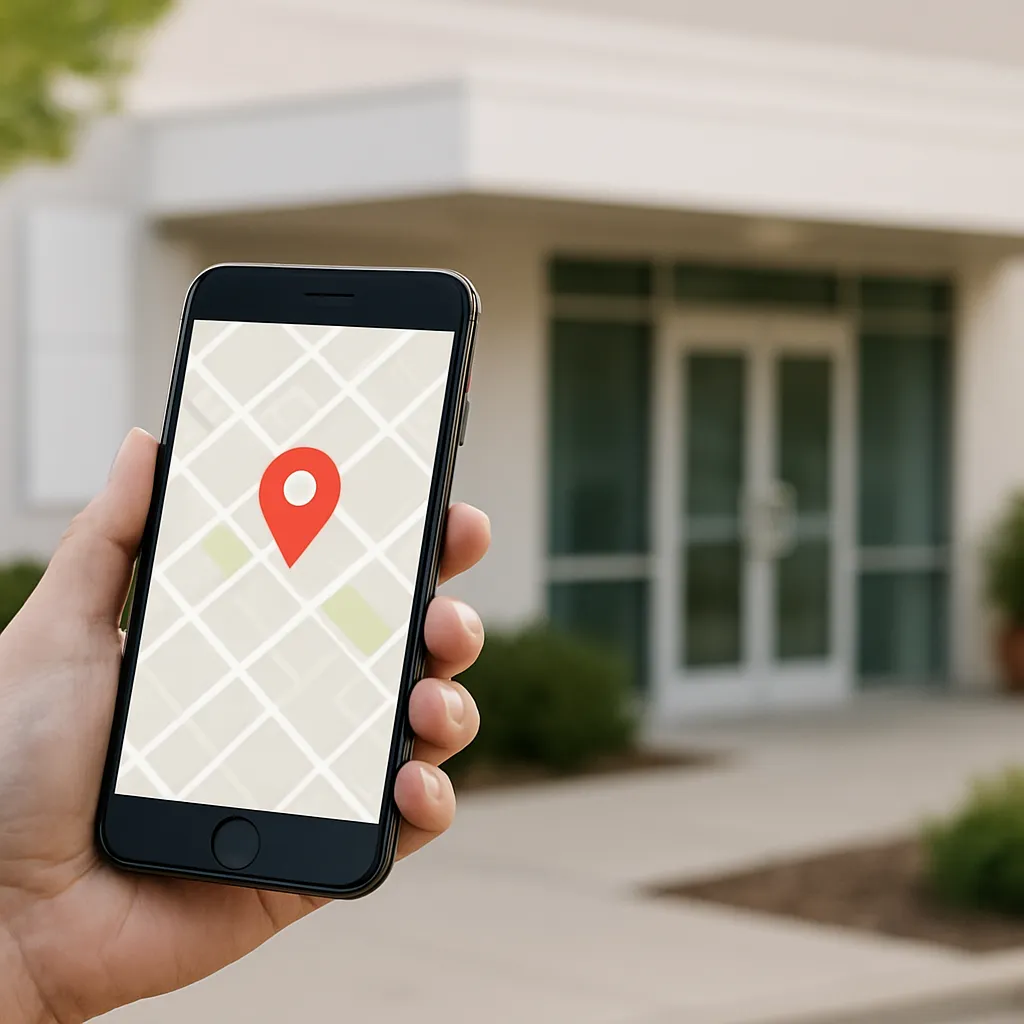
A patient in your city just typed "dermatologist near me" into their phone. Three practices showed up on the map. If yours was one of them, you probably got the call. If not, you didn’t exist to that patient. That map box is the local 3-pack, and it’s the single most valuable piece of real estate in local search for a medical practice.
Getting into the local 3-pack isn’t luck. It’s the result of a handful of decisions Google’s algorithm rewards, plus a few nobody talks about. This guide walks through exactly how doctors and office managers can earn a spot, hold it, and squeeze more calls out of it.
What is the local 3-pack, really?
The local 3-pack is the group of three business listings Google shows above the regular blue links when someone searches for a local service. It sits under the map, includes star ratings, hours, and a call or directions button, and captures the majority of clicks on any local query.
For medical practices, the local 3-pack is often more valuable than page-one organic ranking. Patients searching "pediatrician open now" or "orthopedic surgeon Phoenix" almost never scroll past those first three results. They tap, they call, they book.
Google decides who appears in the local 3-pack based on three signals: relevance, distance, and prominence. Every tactic below strengthens one of those three.
How does Google decide who ranks in the local 3-pack?
Relevance means your Google Business Profile clearly matches the search. If someone types "pediatric dentist" and your profile just says "dentist," you’re at a disadvantage.
Distance is exactly what it sounds like. Google measures how close you are to the searcher. You can’t move your building, but you can influence how Google understands your service area.
Prominence is the fuzzy one. It’s a mix of review volume, review recency, backlinks, citations, website authority, and behavioral signals like how often people tap your listing. Prominence is where most of the winning happens, and where most practices leave points on the table.
For deeper detail on how Google explains these factors, see Google’s own documentation on how local results are ranked.
Fix your Google Business Profile first
Nothing else matters if your Google Business Profile is a mess. Before you spend a dollar on SEO or ads, walk through your profile like a patient would.
Start with your business name. Use the exact name on your signage and legal documents. No keyword stuffing like "Smith Dental, Best Cosmetic Dentist Phoenix." Google will penalize you, sometimes with a suspension. If that happens, here’s how to fix a Google Business Profile suspension without making things worse.
Next, your primary category. This is the single biggest relevance lever in the local 3-pack. A general "Medical clinic" category will lose to a competitor using "Dermatologist" every time. Get specific, then add secondary categories that reflect real services. We go deep on this in our guide to Google Business Profile categories for doctors.
Fill in every field. Hours, phone, website, appointment link, services, insurance accepted, languages spoken, wheelchair access, parking. Google rewards completeness. Empty fields tell the algorithm your profile isn’t a serious signal.
Add real photos. Not stock. Not the outside of a building that could be any office in America. Interior, staff, exam rooms, front desk. Patients bounce off generic listings, and low click-through hurts your ranking.
Reviews are the fuel for local 3-pack ranking
Review volume, review recency, and star average are three of the strongest prominence signals Google uses. Practices that consistently earn new reviews tend to climb, and practices that stop asking tend to drop, even if their star average is high.
The math is uncomfortable. If your competitor has 340 reviews and adds 15 new ones a month, and you have 82 with 2 new ones a month, you will lose. Steady beats a single big push every time.
The good news is that most patients are happy to leave a review if the ask is timed well and worded like a human. We put together a full script and workflow in our post on how to ask patients for reviews without sounding desperate. Steal it.
A quick HIPAA caution. When you reply to reviews, never confirm someone was a patient, never reference specific care, and never share any detail from the visit. Even a thank-you like "great to see you at your appointment" can be a violation. Keep replies generic and gracious. There’s a longer breakdown in our post on why HIPAA makes review responses risky.
How do you build local authority beyond the profile?
Your Google Business Profile doesn’t live in a vacuum. Google looks at the rest of the web to decide how prominent your practice really is. That means your website, your citations, and your backlinks all feed into local 3-pack ranking.
Citations are mentions of your practice’s name, address, and phone number on other sites, especially healthcare directories like Healthgrades, Vitals, Zocdoc, WebMD, and state medical board directories. Consistency matters more than volume. If your address is written 14 different ways across the web, Google gets confused about which one is real.
Audit your top 20 citations. Make sure the name, address, phone, and website match your Google Business Profile exactly. Suite numbers, "St." vs "Street," and old phone numbers are the usual culprits.
Backlinks from local sources also help. A mention from the local chamber of commerce, a sponsorship page for a youth sports team, a feature in a neighborhood magazine, a guest column on a local health blog. These carry more weight for local 3-pack ranking than a random mention on a national site.
Your website still matters for the local 3-pack
Google won’t put you in the local 3-pack if your website is broken, slow, or thin. The site is a trust signal for the profile.
Make sure the website loads fast on mobile. Patients search from phones, and Google measures Core Web Vitals. If your site takes six seconds to render on 4G, you’re being downranked. Here’s how fast your medical website should load and what to fix first.
Every location needs a dedicated page with the address, phone, embedded map, hours, providers who work there, services offered, and unique content. Not a template with the city name swapped out. Google’s spam filters catch that.
Add schema markup for MedicalBusiness or the relevant specialty type. It helps Google connect the dots between your site and your profile.
If you have more than one office, don’t try to rank all of them from one page. We cover the whole playbook in how to rank in the Google map pack for multiple locations.
What about GBP posts, Q&A, and services?
These are the parts of Google Business Profile most practices ignore, and they compound over time.
GBP posts are short updates that appear on your profile. A weekly post about a new provider, a seasonal service, a health tip, or an appointment opening keeps your profile active. Google gives fresher profiles a small but real boost. Even a single post per week outperforms most competitors who never post.
The Q&A section is public and anyone can answer. If you don’t seed it with the most common questions patients ask, someone else will, and their answer might be wrong. Add 10 to 15 real questions and answer them yourself.
The services section is a relevance goldmine. Every service you list gives Google another keyword to match against. List them all, with short descriptions.
How do you convert local 3-pack visibility into booked patients?
Ranking is only half the game. The other half is what happens after a patient taps your listing.
Speed of response is the killer variable. Patients searching "urgent care near me" or "dentist toothache" are ready to book right now. If your phone rings out or your receptionist is on another call, they hit the next result in the local 3-pack.
This is where a lot of practices are quietly losing. The call comes in, nobody picks up, and there’s no callback loop. If that sounds like your front desk, look at how to stop losing patients to phone tag with two-way texting or whether Voice AI should handle after-hours calls for your practice.
Also check the path from tap to booking. Is your appointment link on the profile working? Does it go to a form that takes 90 seconds to fill out, or one that takes 20? Small friction points burn the traffic you worked hard to earn.
Common mistakes that keep practices out of the local 3-pack
A few patterns come up over and over.
Using a virtual address or a PO box. Google requires a staffed physical location for medical practices. Faking it gets you suspended.
Buying reviews or running gift-card giveaways for five-star ratings. Google detects patterns, patients report them, and one purge can wipe out years of work.
Ignoring negative reviews. Not responding tells other patients you don’t care. Responding badly can violate HIPAA. There’s a right way, and it’s worth learning.
Setting up the profile, then never touching it again. The local 3-pack rewards active profiles. Dormant ones drift down.
The long game and why competition matters
Local 3-pack ranking isn’t a one-week project. Most practices see meaningful movement in 60 to 120 days once they get serious about reviews, categories, citations, and website quality. The practices that lock in the top spots tend to keep them, because prominence compounds.
That’s also why we cap our client work at two practices per specialty, per area. If we’re helping a dermatologist in your zip code climb the local 3-pack, we’re not going to turn around and help the one across the street compete for the same three spots. Local search is a zero-sum game inside a radius, and we’d rather do the work right for one practice than split our effort against ourselves.
If you want a serious shot at the local 3-pack in your city, the fundamentals in this guide will get you most of the way. The rest is consistency, and knowing where to focus first.
Most practices see meaningful movement in 60 to 120 days after fixing their Google Business Profile, cleaning up citations, and building consistent review flow. Competitive urban markets can take longer, and rural markets often move faster.
No. The local 3-pack is organic. Google Ads can appear above it as sponsored results, but they don't influence organic local ranking. That said, ads and SEO together often produce better call volume than either alone.
Not really. Google requires a staffed physical location, and proximity to the searcher is a core ranking factor. You may show up occasionally for nearby cities, but consistent ranking outside your actual address is unrealistic and using a fake address risks suspension.
References
- Google. How local results are ranked. https://support.google.com/business/answer/7091?hl=en
- Google Business Profile Help Center. https://support.google.com/business/