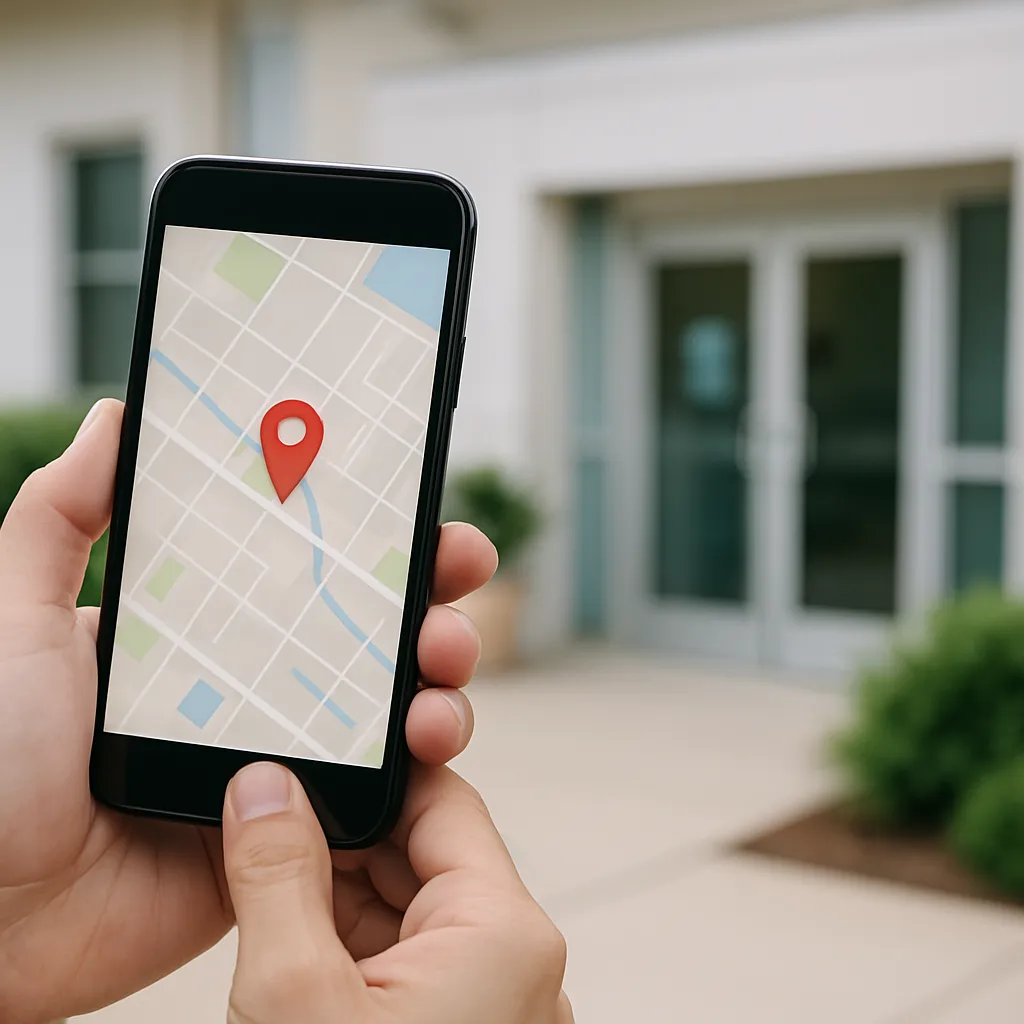
Someone with a sinus infection is sitting in their car at a Starbucks. They type "urgent care near me" or "ENT near me" into Google. Three practices show up in the map pack. They tap the first one, glance at the reviews, and call. That whole decision took under 90 seconds.
Winning the near me search is not a vanity project. It is the single most valuable local marketing outcome for a medical practice, because near me search intent is high, immediate, and almost always ends in an appointment or a phone call. If your practice is not one of those three map results, you are effectively invisible for the patients who need you today.
Here is how to actually win it.
What does "near me" really mean to Google?
The near me search is a bit of a misnomer. Google does not care about the words "near me" anymore. It cares about proximity, relevance, and prominence, the three ranking factors Google itself has published for local results.
When someone in Scottsdale types "dermatologist near me," Google reads that as "dermatologist in Scottsdale, ranked by who is closest, most relevant, and most trusted." The phrase is basically an implied location tag. That is why you cannot just stuff "near me" into your website and hope it works. You have to earn proximity, relevance, and prominence for the searches your patients actually run.
Miss any one of those three and you fall out of the map pack. Nail all three and you become the default answer.
Why the map pack is the real prize
The blue link results below the map still matter, but the map pack, those top three business listings with the little map, gets the majority of taps on mobile. And most near me search traffic is mobile.
Getting into the map pack is not the same as ranking your website. Your Google Business Profile is the asset that competes there, not your homepage. A lot of practices spend thousands on a website redesign and never touch the profile that actually decides whether they win the near me search. If you have never audited yours, start with our complete local SEO guide for medical practices before you spend another dollar on ads.
How do you optimize a Google Business Profile for near me search?
Your Google Business Profile is the engine. Treat it like a living page, not a set-and-forget listing.
Start with the fundamentals. Your practice name should match your signage and legal name exactly, without keyword stuffing. Adding "Best Cardiologist Phoenix" to your business name is a suspension risk, and we have seen practices lose their listing for months over it. If you are already dealing with that, our guide on how to fix Google Business Profile suspensions for doctors walks through the reinstatement process.
Then work through this checklist:
- Choose the most specific primary category. "Dermatologist" beats "Skin Care Clinic." "Pediatric Dentist" beats "Dentist."
- Add every relevant secondary category. A family practice might add "Walk-in Clinic," "Women’s Health Clinic," and "Pediatrician."
- Fill every service with a short description. Google reads these, and they influence which near me search queries you show up for.
- Upload real photos monthly. Interior, exterior, staff, treatment rooms. Google rewards fresh visual content.
- Post weekly updates. Even a short "We are now accepting new Medicare patients" post signals an active listing.
- Keep hours perfect, including holidays. Nothing kills trust faster than driving to a "closed" sign.
Do this consistently for 90 days and you will usually see movement. Skip it and no amount of website work will save you.
Why proximity is the factor you cannot fake
Proximity is the hardest ranking factor because you cannot change where your office sits. A patient searching from three miles away will get different map pack results than one searching from a block away.
That said, you can widen your effective radius. The stronger your reviews, citations, and content, the further out Google will rank you before proximity overrides everything. Practices with weak signals only show up when the patient is basically standing in the parking lot. Practices with strong signals show up across a whole zip code.
If you have multiple offices, this gets more complex. Each location needs its own profile, its own review flow, and its own on-page content. We wrote a full breakdown on how to rank in the Google map pack for multiple locations that covers the traps most groups fall into.
How reviews drive the near me search
Reviews are the fastest lever you have. Google uses both review count and review recency, so a practice with 340 reviews from 2022 loses to a practice with 180 reviews and 12 new ones this month.
Aim for a steady drip, not a flood. Two to five new reviews per week is a healthy target for most practices. A sudden spike of 40 reviews in one week looks manipulative and can trigger filters that hide reviews or worse.
A few rules to keep it clean and compliant:
- Never offer anything of value in exchange for a review. That violates Google’s policy and can violate federal rules.
- Never write reviews yourself, and do not let staff write them.
- Never confirm in a public reply that someone was a patient. That can be a HIPAA problem, even if the reviewer disclosed it themselves. General thank-you language is fine.
- Respond to every review within a few days. Our post on whether you should reply to every Google review explains what to say when you cannot say much.
If you are stuck at 20 reviews and cannot get momentum, the tactics in our guide on getting more 5-star Google reviews fast are the ones that consistently work for medical offices without crossing any lines.
What about your website? Does it still matter for near me search?
Yes, but differently than most practices think. Your website supports the near me search by feeding Google clean, structured information about who you are, what you do, and where you do it.
The essentials:
Your name, address, and phone number should appear in the footer of every page in plain text, matching your Google Business Profile exactly. If your GBP says "Suite 210" and your website says "Ste. 210," Google may not connect them.
Every location deserves its own dedicated page. Not a generic "Locations" list. A real page with directions, parking notes, staff bios, hours, insurance accepted, and services offered at that specific office.
Every service should have its own page too. "Botox," "acne treatment," and "Mohs surgery" are three different searches and three different patient intents. One combined "Services" page will not rank for any of them.
Page speed matters more than most doctors realize. If your site takes six seconds to load on a phone, you are losing patients to competitors whose site loads in two. Our breakdown on how fast your medical website should load covers realistic targets.
And accessibility is not optional. Beyond being the right thing to do, an inaccessible site is a legal risk. If you have not audited recently, read is your practice website ADA-compliant this week.
How do citations and directories affect near me search rankings?
Citations are mentions of your practice name, address, and phone number on other websites. Healthgrades, Vitals, Zocdoc, WebMD, Yelp, your local chamber of commerce, your hospital affiliation pages, the list goes on.
Google uses these as trust signals. If 40 reputable sites all agree that Dr. Chen’s office is at 4820 N. 24th Street, that consistency helps her rank. If half of them say 4820 and half say 4280, Google gets confused and her near me search rankings suffer.
Two rules:
Get your NAP identical everywhere. Same suite format, same phone format, same spelling.
Prioritize medical-specific directories. Being on 200 generic directories matters less than being on the 15 that patients and Google both trust for healthcare.
Answering the phone is a ranking factor in practice
Google does not literally measure your phone answer rate. But the patient behavior it triggers absolutely affects your near me search performance.
When a patient taps "call" from a map result and gets voicemail, they hang up and tap the next practice. That next practice gets the appointment, and often a positive review a week later. Over time, the practice that answers wins the reviews, the bookings, and the ranking momentum.
If your team cannot answer every call live, you have two real options: hire more front desk help, or route to a voice AI system that can book appointments after hours. Our post on whether voice AI should handle after-hours calls walks through the tradeoffs honestly. And if you are missing daytime calls too, why your front desk voicemail is costing you patients is worth 10 minutes.
What most practices get wrong
Most practices try to win the near me search by doing a little of everything, badly. They claim their profile but never post. They ask for reviews but only after a bad visit. They redesign the website but forget the location page. They run Google Ads to compensate for organic rankings they should have earned.
Winning the near me search is boring and consistent. It is 15 minutes a day on your profile, a weekly review-request routine, a monthly content update, and a quarterly audit of your citations. Practices that do those four things for a year rarely have to run rescue-mode ads.
If you want the deeper list of what quietly sinks practices, 9 local SEO mistakes that bury medical practices on Google is our most-read piece for a reason.
Where DoctorRadius fits in
We built DoctorRadius around one idea: your local market has room for a couple of dominant practices per specialty, and we would rather help you become one of them than dilute results by working with everyone. That is why we cap ourselves at two practices per specialty, per area. Your competitor down the street is not our next client.
If you are ready to win the near me search in your market instead of chasing paid clicks forever, the fundamentals in this post are the starting point. The near me search rewards patience, consistency, and the practices that treat local SEO like a habit, not a project.
Most medical practices see meaningful movement in 90 to 180 days with consistent Google Business Profile activity, a steady review flow, and clean on-page SEO. Established competitors and dense urban markets can take longer.
Yes, for the services that drive your revenue. A dedicated page per service gives Google clear signals about what you offer and helps you rank for specific patient searches instead of only your practice name.
No. Adding keywords like "best" or a city name to your Google Business Profile name violates Google's guidelines and can get your listing suspended. Use your real, signed business name only.
References
- Google Business Profile Help, How local search results are determined: https://support.google.com/business/answer/7091
- Federal Trade Commission, Endorsement Guides: https://www.ftc.gov/business-guidance/resources/ftcs-endorsement-guides-what-people-are-asking